
July, 2026
Resources are not, they become — and on the first of July, five waste tips became strategic assets
The appraisal completes
On 1 July the Department of Energy named the winners of the funding notice we analysed in November: $75m across five pilot projects — the University of North Dakota, Valor Metals, CONSOL Innovations, American Resources and, most symbolically, Peabody Energy, the largest coal name in America — to produce market-ready rare earths, gallium and germanium from coal and coal-based feedstocks, under National Energy Technology Laboratory management. The pilots are explicitly that: subject to negotiation, funding not guaranteed, commercial plants not promised. None of which dilutes the significance. Eight months ago we argued that grade is a policy variable and that Washington had begun legislating tonnage into existence. In March we argued the state had started bidding the right tail of the cost curve. The award is both arguments, consummated, with names attached.
Zimmermann’s theorem
The economics profession supplied the framework for this moment ninety years early. Erich Zimmermann’s World Resources and Industries (1933) advanced what he called the functional theory: ‘resources are not, they become.’ Nothing — not oil, not uranium, not a Wyoming coal seam — is a resource by nature. A substance becomes a resource through appraisal: the joint verdict of technology, price and politics on whether it is worth the trouble. Uranium was paint pigment until 1939. North Dakota’s lignite ash was a disposal liability until a floor price, a licence war and a federal notice re-appraised it. The tip did not change. The appraisers did.
What makes 2026 remarkable is that the appraisal is happening on the record, in dollar amounts, with dates. The Pentagon’s $110 floor (July 2025) appraised the price. The November notice ($275m, coal topic area) appraised the technology worth de-risking. The July award appraised the specific sites. Researchers at the University of Texas have estimated America’s accumulated coal ash holds some $8.4bn of rare earths at prevailing prices; the more useful number is the one the government keeps publishing — what it will pay, above any market, for the kilogram that owes nothing to Beijing. Zimmermann’s appraisal used to be the market’s diffuse verdict. It is now a procurement schedule.
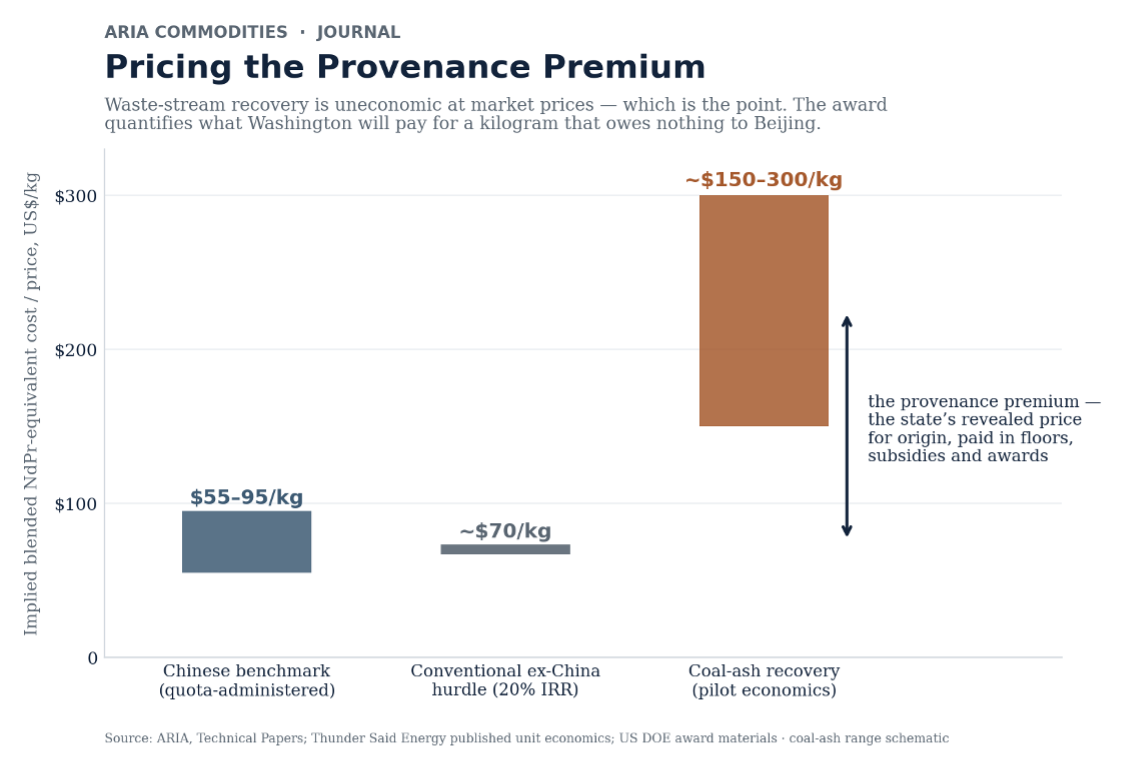
Figure 1: Pricing the Provenance Premium
The chemistry consents
The selection of coal waste is less quixotic than the headlines suggest, and the reason is acid. Extracting rare earths from any feedstock is, at bottom, a chemistry bill: leach the material, typically with sulphuric acid; remove the impurities; separate the elements through hundreds of solvent-extraction stages; precipitate and calcine. At ash grades of a few hundred parts per million, that bill per recovered kilogram is brutal — orders of magnitude more material handled than at percent-grade ore. But the coal complex holds two quiet advantages. The mining is already paid for: the feedstock sits in engineered impoundments beside rail. And its second waste stream, acid mine drainage — the sulphuric run-off that has made Appalachian remediation a century’s burden — arrives pre-leached, rare earths already in solution, which is why the National Energy Technology Laboratory and West Virginia University have spent a decade proving recovery from drainage sludges. The pollution, with modest irony, contains the cure. Remediation liabilities and resource assets turn out to be the same ponds, appraised twice.
What we got right, and what we watch
The receipts, as promised. November’s claim — that the notice would convert waste into reserve by administration — has survived contact with events: the award landed on schedule, at the sites the framework predicted mattered. March’s claim — that the $110 floor would organise both sides of the Western market — has hardened into common usage; the ex-China complex now negotiates around a number no exchange discovered. What we watch is unchanged and dated. The October suspension expires on 10 November; its lapse or renewal is the single largest scheduled repricing event in the complex. The thrift curve — dysprosium loadings down from 30 per cent to 4 in a generation — keeps engineering demand away from the very grades the state is subsidising into supply. And the pilots themselves must now do chemistry in public: a 48-month window, go/no-go gates, 20 per cent private cost-share. Pilots fail; that is their function. The appraisal, however, does not fail with them. States reveal their reservation prices in what they are willing to fund — and this state has now funded, floored, licensed and named its way to the most legible reservation price in the history of the industry.
Zimmermann’s dictum was descriptive. Washington has made it a business model. Resources are not; they become — and this decade, they become American, at a premium the government publishes in instalments.
Source: US DOE award announcement (1 July 2026) and NOFO DE-FOA-0003583; NETL/WVU technical literature; US DoD/MP Materials disclosures; University of Texas at Austin estimates; ARIA research; prior ARIA Journal notes (November 2025, March 2026). This note reflects ARIA Commodities’ research views and is provided for information only; it does not constitute investment advice.