
September, 2026
Zero Is a Price
The 2026 concentrate benchmark settled at nothing. That is not the absence of a price. It is a complete answer to the question of who is scarce.
THE RENT, NOT THE FEE
A treatment charge is conventionally read as the cost of turning concentrate into metal. That reading has always been slightly wrong and is now actively misleading. The TC is better understood as the division of a rent between the party holding units and the party holding capacity — a bargaining outcome, not a cost recovery. Read it that way and the last three years stop being a decline and start being a transfer.
In January 2026 the annual benchmark between Antofagasta and the Chinese smelters settled at $0.00 per dry metric tonne, with a zero refining charge. The 2025 settlement was $21.25 and 2.125 cents; the 2024 contract year was $80. Through 2015 to 2020 the range sat at $80 to $120. Industry estimates put the break-even of a modern custom smelter at $50 to $60. The smelter is therefore not operating on a thin margin. It is operating at a structural loss on benchmark tonnes, sustained by by-product revenues from gold, silver and sulphuric acid.
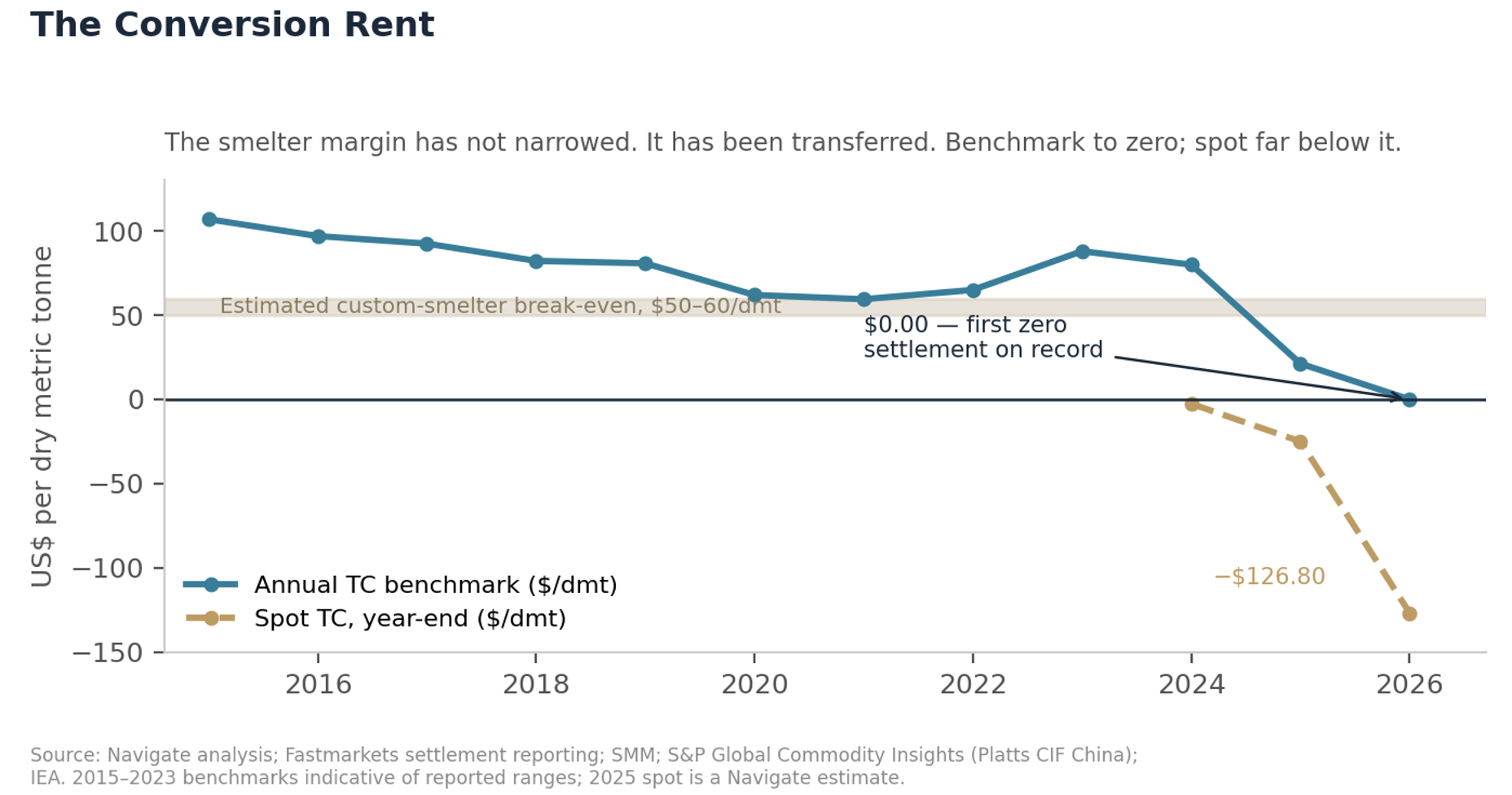
Chart 1. The Conversion Rent. Annual benchmark and spot treatment charges against estimated custom-smelter break-even.
Spot has gone further and faster. Platts assessed CIF China clean concentrate at minus $78.50 per tonne in April 2026. By the end of June the assessment was minus $126.80, and trader-to-smelter transactions were reported as low as minus $220. At those levels a smelter is not processing for free. It is paying for the privilege of running.
WHO BUILT THE CAPACITY
The cause is not mysterious and it is not cyclical. Since 2005 China has accounted for over 90 per cent of the growth in global copper smelter output, lifting its share from around 15 per cent to roughly half of global supply in 2025. Capacity was added against a concentrate supply that did not follow. The result is a midstream competing itself into negative margin whilst the metal it produces trades at records.
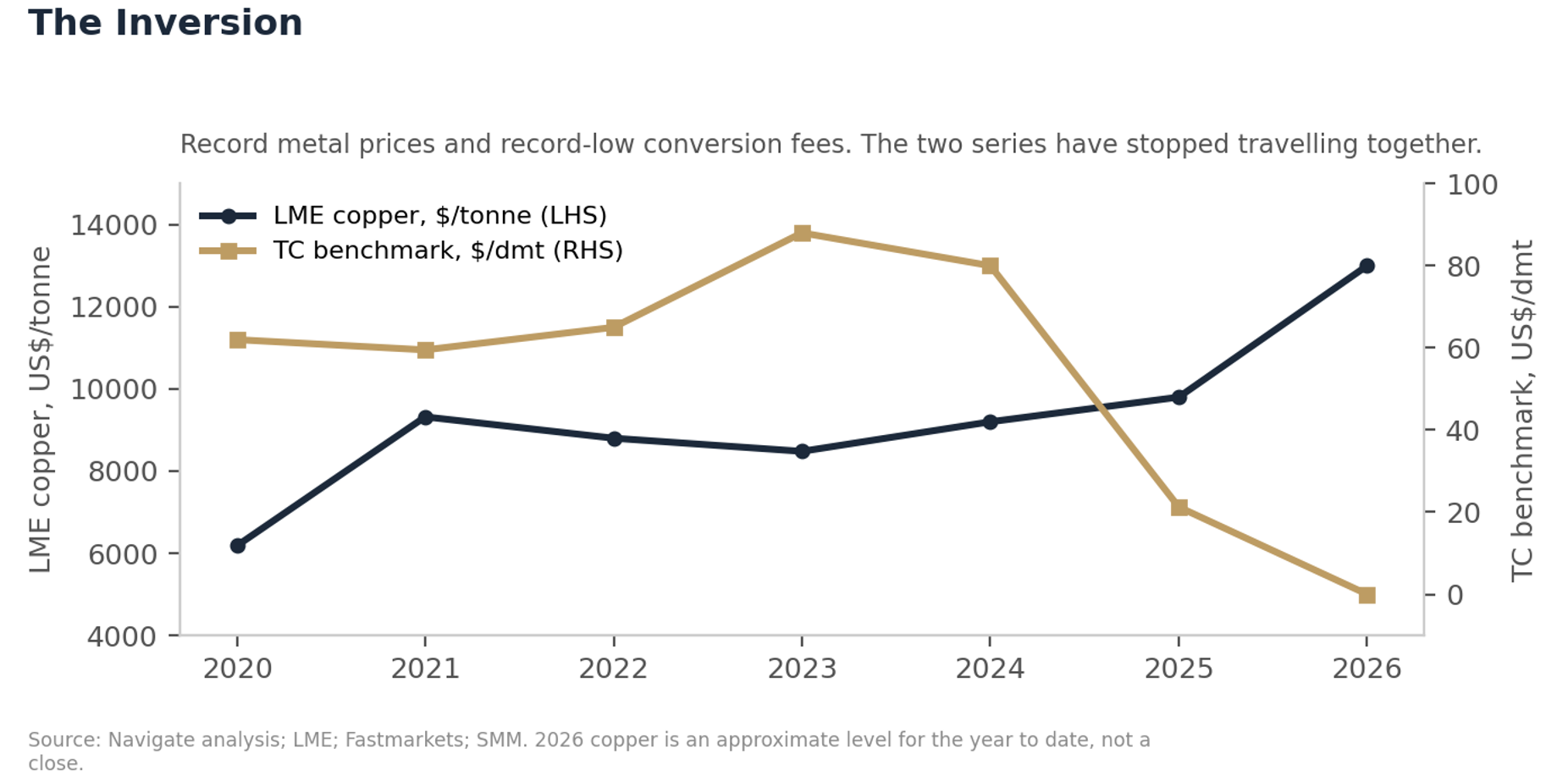
Chart 2. The Inversion. Record metal prices alongside record-low conversion fees.
The institutional consequence is already visible. Antofagasta has moved to spot-indexed concentrate sales with several Chinese smelters rather than a fixed mid-year charge, with a guaranteed floor. Freeport has moved away from the benchmark it helped set for decades. When counterparties stop agreeing fixed numbers and begin referencing published indices, the benchmark is not being renegotiated. It is being retired.
THE DESK'S POSITION
Three conclusions follow, and only the first is widely held.
The first is that concentrate producers are structurally advantaged and should not integrate downstream. That much is obvious from the chart.
The second is that nobody rational builds conversion capacity into a zero-charge market, which means the 2030s refining bottleneck is being created now, by the absence of decisions taken today. Namibia's Tsumeb ceasing operations amid record-low charges is the clearing price of that contradiction, and the loss of a regional custom smelter in southern Africa has consequences for every complex-concentrate producer on the continent.
The third is ours, and it is the position we hold. The operating margin of conversion capacity is falling whilst the option value of existing, permitted conversion capacity is rising. Those two facts are usually confused. An operating smelter today is a loss-making asset; a permitted, idle or optioned smelter is a call on the reversal, struck at a level nobody will replicate because nobody will build. We are long units and long optioned conversion, and we are explicitly not long operating conversion margin.
"Nobody sanctions a new smelter at a zero benchmark. Which is precisely why the ones that already exist have become interesting."
— Concentrates trader, European trading house.
WHAT THIS RULES OUT
It rules out a category of project that is presently fashionable. Any proposal to build a cathode facility fed by purchased concentrate is a proposal to buy a rent that has already been transferred to the miner. The economics of integration are worse in 2026 than at any point in three decades, and they are worse for a structural reason rather than a cyclical one. Integration is a bet that the midstream margin returns; the midstream margin will return only when capacity retires, and capacity is retiring into the hands of whoever had the patience to hold a permit.
RECEIPTS
We will carry three markers forward. The January benchmark settlement, each year, against this note. Smelter closure and restart announcements, which are the supply-side second derivative. And the first year in which the benchmark reprices positive — which we will date when it happens rather than forecast now, because the honest answer is that we do not know and neither does anybody quoting a number.
"The benchmark has stopped being a price and started being a formality. We price off the index now and assume the annual number is theatre."
— Head of raw materials, Asian smelting group.
A price of zero is not the absence of a price. It is the most precise statement the market has made in a decade about who is scarce.
SOURCES
IEA commentary on copper smelter economics, 2026. Fastmarkets benchmark settlement reporting. Shanghai Metals Market. S&P Global Commodity Insights, Platts CIF China clean concentrate assessments. Reuters and Bloomberg reporting on Antofagasta spot-indexed contracting, June–July 2026. Prior in this argument: "Grade Is a Policy Variable"; "The Alchemy of Ash". This note is research and not a recommendation to transact.